
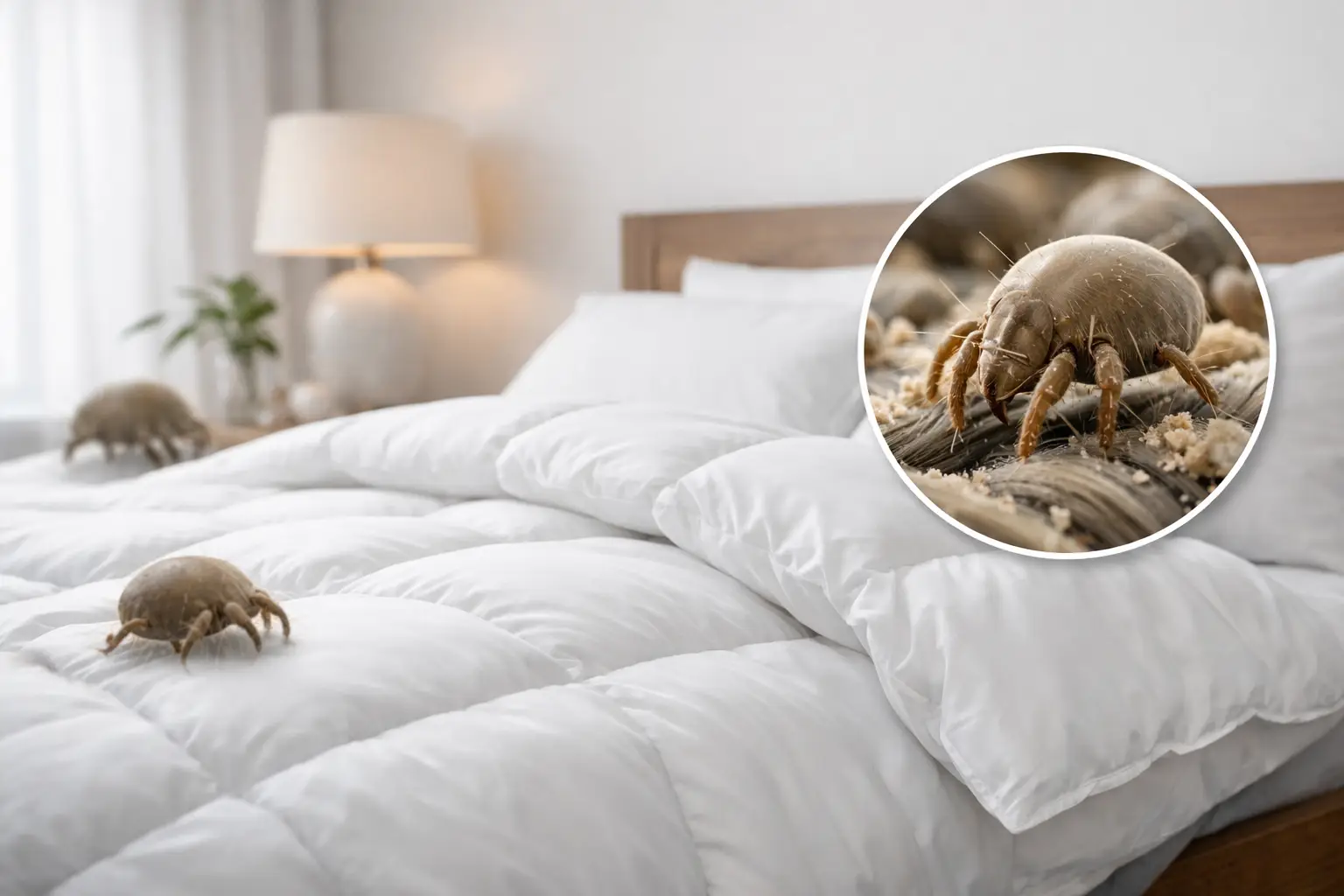
Those who wake up with a stuffy nose, itchy eyes, or a feeling of breathlessness often notice first in bed that something is not right. An anti-dust mite duvet can then make a significant difference—not as a miracle cure, but as a sensible step toward a calmer and cleaner sleeping environment.
What exactly does an anti-dust mite duvet do?
Dust mites prefer to live in warm, slightly damp places where skin flakes are present. This makes the bedroom attractive, and bedding in particular is a logical place where mites feel comfortable. The reaction is usually caused not by the mite itself, but by the allergens associated with them.
An anti-dust mite duvet is intended to make that environment less favorable. This is achieved in various ways: sometimes through a densely woven ticking, sometimes through material that naturally remains drier and better ventilated, and sometimes through a combination of both. The goal is simple: less accumulation of moisture, dust, and allergens around the body during the night.
There is an important nuance here. Anti-dust mite does not automatically mean completely allergen-free. The mattress, the pillow, the bedroom air, and the humidity also play a role. Those who are sensitive often only notice a real difference when the duvet becomes part of a broader approach.
Why material matters so much
When choosing duvets, people often look at the warmth class first, but for individuals with allergies or sensitivities, the material is at least as important. Not every duvet that feels soft or warm also supports a healthy sleeping environment.
Synthetic duvets are often chosen because they are affordable and washable. While this can be practical, it says little about comfort during use. Many synthetic fillings retain heat differently than natural fibers and wick away moisture less effectively. This can result in the bed feeling clammy, especially for those who perspire. It is precisely this slightly more humid microclimate that is less favorable if you want to limit dust mites.
Natural materials, and wool in particular, have a different character. Wool is breathable, temperature-regulating, and highly moisture-absorbent without feeling wet. As a result, the sleeping environment remains more balanced: less stifling on a warm night and cozy during cooler periods. This makes wool not only comfortable but also interesting for those seeking a duvet that gives dust mites less of a chance.
Wool as a natural choice
A wool duvet is often chosen by people who are conscious of health and the indoor environment for good reason. Wool can absorb moisture and release it back into the ambient air, keeping the bed drier. Additionally, the material is naturally resilient and durable, provided it is processed correctly.
It is important to note that not all wool filling is the same. The origin, purity, and finish make a difference. Those who value a chemical-free sleep product should therefore look not only at the filling but also at the ticking and any treatments. A pure duvet without unnecessary synthetic additives aligns better with a bedroom where peace and health are central.
What to look for in an anti-dust mite duvet
Choosing a good duvet does not start with marketing terms, but with the question of how you sleep. Do you get warm quickly, do you perspire a lot, or are you primarily sensitive to dust and odors? These answers determine which duvet will remain pleasant in the long term.
The first feature to look for is ventilation. A duvet may be warm, but it should not be stifling. As soon as heat and moisture accumulate, sleeping feels less fresh and the bed environment becomes less stable. A breathable filling and a natural, well-woven ticking help prevent this.
The second factor is moisture regulation. Many people underestimate how much moisture a body releases during the night. A duvet that can absorb and wick away that moisture feels drier and cleaner. This is not only pleasant for comfort but also relevant if you want to give dust mites as little space as possible.
The third factor is maintenance. Even the best duvet requires care. Regular airing, a well-ventilated bedroom, and a mattress protector that suits your situation remain important. An anti-dust mite duvet works best in an environment that is also kept clean and dry.
The role of the ticking
The outer fabric of a duvet sometimes receives too little attention, even though this layer does a lot. A densely woven cotton ticking can help prevent dust and allergens from passing through easily. At the same time, the fabric must remain breathable. Fabrics that are too closed can feel stifling, while a weave that is too open is less effective.
Therefore, it pays to choose materials that are not only soft but also carefully finished. Certifications such as GOTS or OEKO-TEX can provide extra confidence that fabrics are responsibly produced and free from unwanted harmful substances.
When a synthetic duvet may still be appropriate
There are situations where a synthetic duvet feels logical, for example, if someone wants to be able to wash the duvet at very high temperatures or has a limited budget. For some households, this is an understandable choice. However, cheap is not always economical if sleep comfort suffers or if the duvet needs to be replaced sooner.
Those primarily seeking a calmer sleeping environment often choose natural materials because of how they handle heat and moisture. You notice this difference not just in theory, but especially in the middle of the night—at the moment when a duvet needs to continue feeling dry, light, and comfortable.
An anti-dust mite duvet for children and sensitive sleepers
With children, and certainly with babies, parents want to make as few concessions as possible regarding material purity. This is understandable. A young body spends a lot of time in bed, and a fresh, breathable sleeping environment is then extra valuable.
For adults with eczema, allergic complaints, or sensitive airways, a duvet is also more than just a layer of warmth. It lies directly against the body, night after night. It then matters whether a material feels stifling or helps to keep heat and moisture in balance.
Furthermore, a duvet that is too heavy or too warm can cause restlessness. Many people sleep better under a duvet that is cozy without pressing down or enclosing them. It is precisely this combination of light comfort and natural regulation that makes the difference between sleeping and truly resting.
How to get more out of your duvet
Even a carefully chosen duvet performs better with the right habits. Open the bedroom windows regularly, let the bed breathe for a while in the morning before making it, and choose bedding that can also regulate moisture. Consider natural fitted sheets, pillowcases, and mattress protectors that do not close off unnecessarily.
It also helps to monitor the humidity in the room. A bedroom that is too humid not only feels less pleasant but also works against you if you want to limit allergens. Especially in well-insulated homes, ventilation can easily be forgotten.
Those who want to notice a real difference should therefore look at the whole picture: duvet, pillow, mattress protection, and bedroom environment. At NaturaBed, this coherence is central, because healthy sleep rarely depends on a single product alone.
Is more expensive also better?
Not automatically. A higher price can be related to purer materials, better finishing, and more sustainable production, but this must be visible in what you buy. A duvet made of natural wool with a high-quality cotton ticking and clear certification often offers more than a generic “anti-allergy” label without further explanation.
At the same time, the most luxurious duvet may not be the best choice for everyone. Someone who is always cold is looking for something different than a warm sleeper who perspires quickly. And someone with a distinct allergy profile may benefit from a different combination of materials and maintenance. The best duvet is therefore not the most expensive one, but the duvet that suits your body, bedroom, and sensitivities.
Rest often begins with what you do not feel
A good duvet does not draw attention to itself. It does not feel clammy, heavy, or stifling. It simply supports a peaceful night. Those looking for an anti-dust mite duvet are usually looking for more than just protection against allergens. It is also about breathing room, softness, and the confidence that the materials around you feel clean, pure, and pleasant.
If you are a sensitive sleeper, this is not a detail but the foundation. It is then wise to choose a duvet that not only keeps you warm but also contributes to a drier, fresher, and healthier bed environment—night after night.