
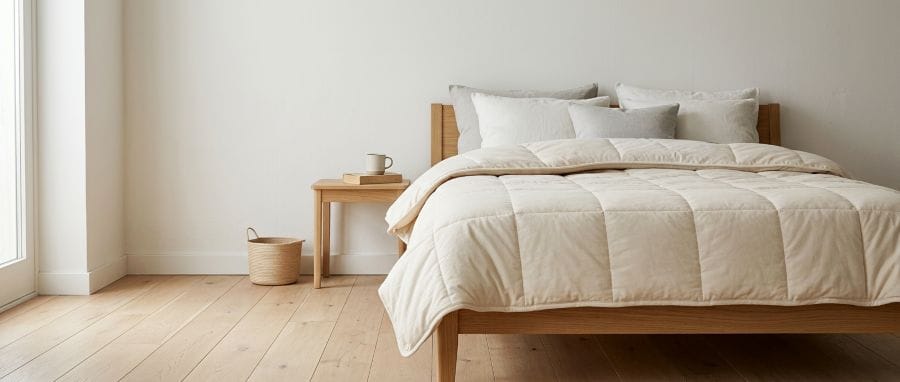
Using a duvet without a duvet cover is becoming increasingly popular. Instead of putting a separate duvet cover around the duvet, more and more people simply use the duvet directly over their body. It is practical, looks uncluttered and means one less layer to wash regularly.
But when you use a duvet without a duvet cover, the choice of materials becomes even more important. After all, the cover fabric and filling come directly into contact with your skin. A duvet that is easy to wash is therefore useful, but it is just as important to look at what the duvet is made of.
At NaturaBed, there are several natural duvets that you can use without a duvet cover. All Season Duvet Cotton, All Season Duvet Hemp and Spring Fall Duvet Kapok are particularly interesting when you want to combine the convenience of washing with a natural sleep environment.
Can you use a duvet without a duvet cover?
Yes. A duvet does not necessarily have to be inside a separate duvet cover. Whether this is practical mainly depends on the properties of the duvet itself.
When you use a duvet directly against your skin, it has to cope with more. Perspiration, skin oils and other everyday dirt come directly into contact with the cover fabric. A duvet used this way should therefore be easy to wash and maintain.
This means that not every natural duvet is automatically suitable. Some natural fillings are specifically designed to be washed as little as possible and mainly aired regularly. If you consciously choose a duvet without a duvet cover, it is therefore better to look specifically for natural fillings and cover fabrics that can withstand regular washing.
Why do people choose to use a duvet without a duvet cover?
The appeal is mainly practical. You remove one layer from the bedding and no longer have to put a duvet cover around a thick duvet. You can also wash the duvet itself whenever necessary.
There is also an aesthetic advantage. A beautifully finished duvet can lie directly on the bed without having to hide the material underneath a cover. Especially when the duvet has a calm, natural look, this fits well with a simple bedroom.
But perhaps the most important difference is how it feels when you sleep. Without a duvet cover, you lie directly against the duvet’s cover fabric. This means that not only the filling, but also the outer fabric determines how the bed feels.
A natural duvet without a duvet cover: what should you look for?
Not every duvet is suitable for this. When choosing, pay particular attention to four properties: washability, material, breathability and skin comfort.
1. The duvet should be easy to wash
If you sleep without a duvet cover, washability is more important than when the duvet is always protected by a separate cover. Therefore, always check the care instructions for the specific product.
A duvet that can be washed easily makes it much simpler to sleep without a duvet cover. You do not have to rely on a separate protective layer to keep the bed fresh.
That is exactly why certain natural duvets are well suited to this. The NaturaBed collection includes washable, easy-to-maintain cotton, hemp and kapok duvets.
2. Choose a material that feels pleasant without an extra layer
A duvet cover can significantly change how a duvet feels. Without that extra layer, you notice the cover fabric much more.
Natural materials have a clear advantage for people who prefer not to have a synthetic layer directly against their skin. Cotton feels familiar and supple, hemp has a somewhat firmer, natural texture and kapok feels light and airy.
Which fibre suits you best depends on your preference and the season. If you would like to know more about the differences between natural fillings, also see our guide to choosing a natural duvet for each season.
3. Pay attention to ventilation and moisture regulation
Without a duvet cover, you want not only a duvet that is easy to keep clean, but also one that feels comfortable to sleep under. A natural filling can help handle heat and moisture in a balanced way.
This is particularly relevant if you get warm easily or sweat at night. A duvet that handles heat and moisture well feels more comfortable throughout the night than a combination of highly occlusive synthetic layers.
If you specifically struggle with night sweats, you can find more information in which duvet is suitable for night sweats.
4. Look at the complete composition
A duvet can look natural on the outside while still having a synthetic filling. If you want to sleep without a duvet cover and consciously choose natural materials, it is therefore important not to look only at the cover fabric.
Look at both the filling and the outer fabric. Polyester, synthetic fibres and artificial treatments are not automatically problematic, but they are less aligned with choosing the most natural sleep environment possible.
Would you like to explore this in more depth? Also read choosing a natural or synthetic duvet.
Which natural duvets are suitable without a duvet cover?
If you want to combine the convenience of a duvet without a duvet cover with natural materials, washable plant-based fillings are particularly interesting. Within the NaturaBed collection, cotton, hemp and kapok are logical choices.
Cotton duvet without a duvet cover
Cotton is one of the most accessible choices. The material feels familiar, is relatively easy to maintain and suits people looking for a duvet that is practical for everyday use.
The All Season Duvet Cotton is interesting if you want one system that you can use throughout multiple seasons. For warmer periods, there is also a Summer Duvet Cotton.
Hemp duvet without a duvet cover
Hemp is an interesting choice if you are looking for a natural duvet with a somewhat firmer, airier character. The fibre is known for its strong, durable properties and fits well with a simple sleep concept in which you want to use as few layers as possible.
For different seasons, there are All Season Duvet Hemp, while a Spring Fall Duvet Hemp can be interesting if you are looking for a less warm option.
Kapok duvet without a duvet cover
Kapok is a plant-based fibre that naturally feels light and airy. This makes it attractive for people who want to use a duvet without a duvet cover while still valuing a lightweight natural filling.
There are several options, including the Summer Duvet Kapok and the Spring Fall Duvet Kapok.
Why a natural duvet is an interesting alternative to coloured synthetic duvets
Part of the appeal of using a duvet without a duvet cover comes from coloured duvets that can be used directly as bedding. They are often designed with convenience as the starting point: wash, dry and put back on the bed.
That practical idea is appealing in itself. But anyone who consciously considers materials will also look at the composition. A duvet can be easy to wash and look attractive while the filling or fabric is largely synthetic.
That is why you do not have to choose between convenience and natural materials. A washable cotton, hemp or kapok duvet can combine both: you can use the duvet directly and maintain it regularly without having to choose a synthetic filling.
The colour also deserves attention. When you use a duvet without a duvet cover, you automatically pay more attention to the appearance of the cover fabric. With a natural sleep product, it is interesting not only to ask which colour you like, but also how the fabric and colour were produced and which materials were actually used.
A duvet without a duvet cover is not the same as a duvet that does not need washing
A common misconception is that leaving out the duvet cover mainly means you have less washing to do. In reality, the maintenance shifts. You no longer wash the cover, but the duvet itself has more direct contact with your skin.
That is why airing the duvet regularly is still advisable, and you should follow the duvet’s washing instructions. A washable duvet makes this easy, but you do not need to wash it after every night. Good maintenance mainly means keeping the duvet clean, dry and well ventilated.
With natural materials, it is also important to follow the specific care instructions. Not every natural filling responds to washing in the same way. The properties of wool, for example, differ greatly from those of cotton, hemp or kapok.
Would you like to know how to keep a natural duvet looking good for as long as possible? Also read our guide to maintaining a natural duvet, with particular attention to materials that require different care.
Can a duvet without a duvet cover also be sustainable?
It can. A simpler bedding system does not automatically mean you are sleeping less sustainably, but the choice of materials remains decisive.
A natural duvet made with a plant-based fibre can be an interesting choice if you want to limit synthetic materials in your bedroom. Cotton, hemp and kapok are plant-based fillings and therefore also fit a vegan sleep environment.
The advantage is that you do not have to give up the practical concept of a duvet without a duvet cover in order to sleep more naturally. You can choose a duvet that can be used directly, is washable and does not require an animal-based filling.
When is sleeping without a duvet cover less practical?
A duvet without a duvet cover is not the ideal solution for everyone. If you like to regularly change the colour or look of your bedding, a separate duvet cover will be more practical. A cover can also provide extra protection when the duvet itself is not designed to be washed frequently.
Your personal sleep preference also matters. Some people prefer a separate cotton or linen cover against their skin. Others appreciate direct contact with the cover fabric and the simplicity of a single washable layer.
So there is no single universally correct choice. The most important thing is that the duvet suits the way you actually want to use it.
How to choose a natural duvet without a duvet cover
Would you like to combine the duvet without a duvet cover trend with natural sleep? Keep it simple:
- Choose a duvet that is explicitly washable according to the care instructions.
- Look at both the filling and the cover fabric, not just the appearance.
- Choose a natural fibre that suits your warmth needs.
- Pay attention to breathability and moisture regulation if you get warm easily.
- Check that the duvet feels comfortable directly against your skin.
- Air and maintain the duvet according to the instructions.
For people who want to sleep naturally without unnecessary layers, cotton, hemp and kapok are particularly interesting options. They show that a simple and practical bed does not automatically have to be synthetic.
A duvet without a duvet cover can therefore fit perfectly well into a natural bedroom. The key is not to look only at the convenience of washing or the colour of the outer fabric, but at the product as a whole. With a washable duvet made from a natural, plant-based filling, you get the best of both worlds: less hassle with bedding and a sleep environment that fits consciously choosing natural sleep.